KEY HIGHLIGHTS
- Platform Workers CPF Transition Support (PCTS) continues in 2026 with reduced but significant government offset.
- Government covers 75% of the CPF employee contribution increase in 2026, limiting take-home pay impact.
- No application required; eligible Singapore citizens receive support automatically via CPF.
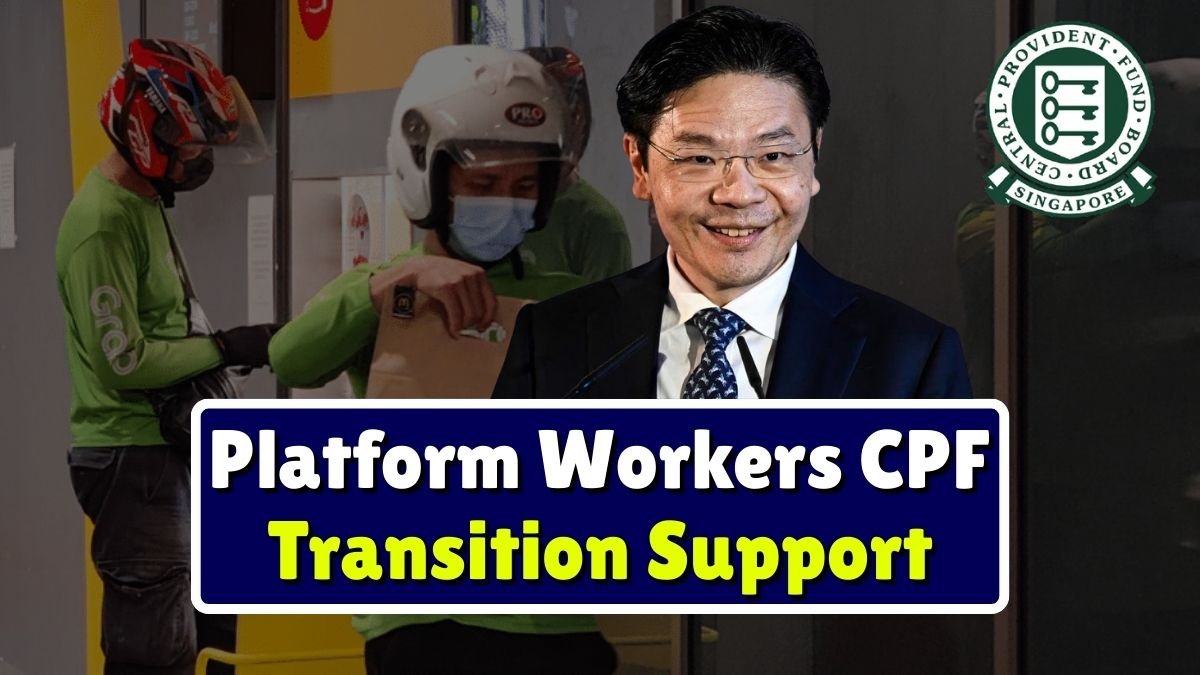
Singapore’s platform workforce enters a critical adjustment phase in 2026, as mandatory CPF contributions continue under the Platform Workers framework. The CPF Transition Support (PCTS) remains a key safeguard to ease income impact while strengthening long-term financial security.
Platform Workers CPF Transition Support 2026
| Item | Details |
|---|---|
| Mandatory CPF start | From 2025 (born on/after 1 Jan 1995) |
| 2026 PCTS offset | 75% of employee CPF increase |
| Target group | Lower-to-middle income platform workers |
| Application needed | No |
| CPF accounts affected | OA, SA, MediSave |
Why CPF Contributions for Platform Workers Exist
Previously, platform workers were treated as self-employed persons, contributing mainly to MediSave. This limited access to housing loans and retirement savings. The new framework aligns platform workers with employees, ensuring structured savings for housing, healthcare, and retirement.
To prevent sudden income shock, CPF rates are phased in over five years. PCTS offsets part of the worker’s CPF share during this transition.
What Is PCTS in 2026?
PCTS is government-funded support that reduces the immediate impact of higher CPF deductions.
- 2025: 100% of the increase was offset
- 2026: 75% of the increase is offset
- Support tapers further in later years
The remaining portion encourages gradual financial adjustment while CPF balances grow.
Who Is Eligible for PCTS in 2026
You qualify if you meet all the following:

- CPF Status: Mandatory contributor or voluntary opt-in
- Citizenship: Singapore Citizen
- Income: Net Investment Income (NII) of S$3,000 or below per month from platform work
- Work Status: Active with licensed platform operators
Eligibility is assessed automatically based on CPF and income records.
How 2026 Affects Your Take-Home Pay
Example:
- Age: 30
- Monthly income: S$2,500
- CPF employee rate increase in 2026: 5% (illustrative)
Government support:
- 75% of the increase is offset under PCTS
Result:
Your actual cash reduction is limited, while the full CPF contribution (employee + platform operator + government support) builds your savings.
How Your CPF Accounts Benefit
Ordinary Account (OA)
Higher OA balances improve eligibility for HDB loans and help service monthly housing instalments.
MediSave
Stronger MediSave balances support healthcare needs, including insurance premiums and accident-related treatment.
Special Account (SA)
SA earns higher interest. Early contributions improve the likelihood of reaching the Full Retirement Sum.
How PCTS Is Paid
- Automatic assessment by CPF Board and MOM
- Notification via SMS or mail
- Disbursement credited directly into CPF accounts
[Link to Official Source – Apply Here]
Why This Matters
The 2026 transition is a balance between income protection and long-term security. Without PCTS, CPF increases would significantly reduce cash flow. With it, platform workers gain housing access, healthcare coverage, and retirement savings that were previously limited.
Key Points to Watch in 2026
- Ensure income declarations to IRAS are accurate
- Opt-in decisions for older workers are permanent
- CPF contributions remain tax-deductible
Frequently Asked Questions
Does PCTS cover the platform operator’s CPF share?
No. Operators must pay their own share separately.
Will PCTS continue after 2026?
Yes, but support tapers further in later years.
Do part-time riders qualify?
Yes, if income criteria are met.
Does PCTS affect Workfare Income Supplement (WIS)?
No. Eligible workers continue receiving WIS.
Will my take-home pay drop in 2026?
Slightly, but far less than without PCTS.
Sources:
- Ministry of Manpower (MOM) – Platform Workers Bill
- Central Provident Fund (CPF) Board – Platform Workers Overview
