KEY HIGHLIGHTS
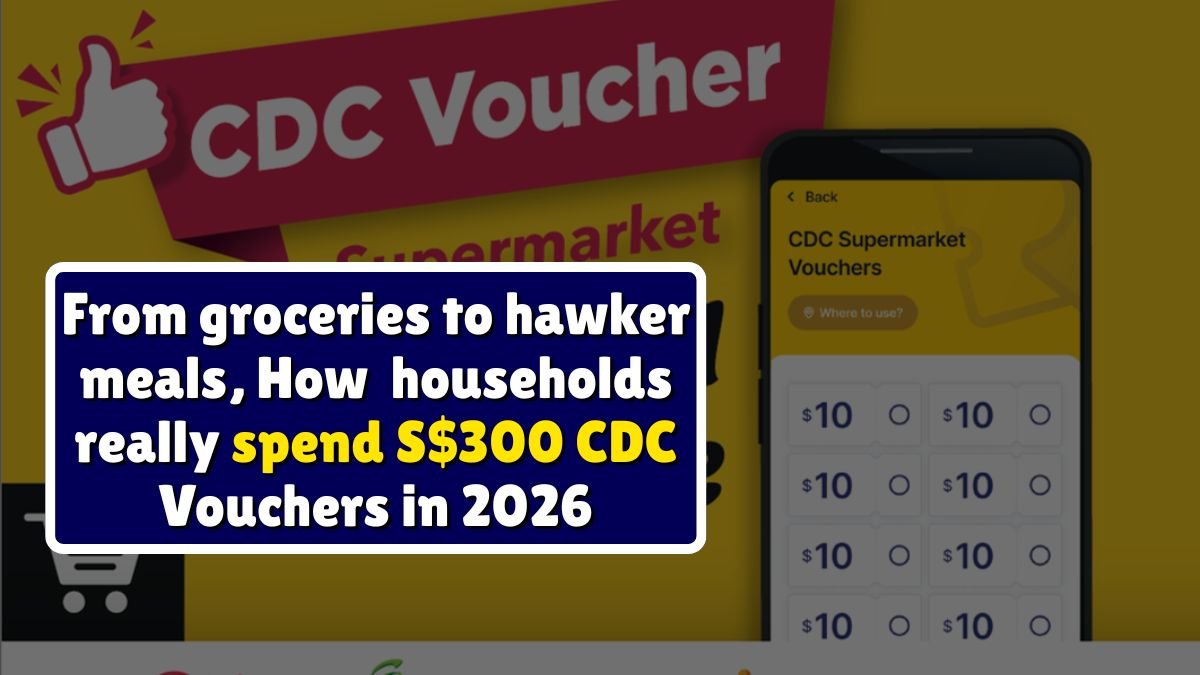
- All Singapore households can claim S$300 in CDC Vouchers from January 2026 under the Assurance Package.
- S$150 is allocated for heartland merchants and hawkers, and S$150 for participating supermarkets, valid until 31 December 2026.
- Households should prioritise essential food and services early to avoid expiry and maximise cost-of-living relief.
With GST at 9% and everyday prices remaining elevated, CDC Vouchers in 2026 play a practical role in managing food and daily expenses for most Singapore households.
2026 CDC Voucher Breakdown
| Category | Amount | Where It Can Be Used | Validity |
|---|---|---|---|
| Heartland Merchants & Hawkers | S$150 | Hawker stalls, neighbourhood shops, clinics, services | Until 31 Dec 2026 |
| Participating Supermarkets | S$150 | Major supermarket chains | Until 31 Dec 2026 |
| Total Per Household | S$300 | — | — |
How the S$150 Heartland Portion Is Commonly Spent
For many families, the heartland vouchers are channelled into regular meals and essential services close to home.
With hawker meal prices typically between S$4.50 and S$6.00, S$150 covers around 25 to 30 meals, easing weekday food costs.
Common Uses in 2026
- Hawker meals for breakfasts and dinners
- Neighbourhood GP and TCM clinics, especially for seniors
- Haircuts and basic grooming services
- Optical repairs or prescription lenses
- Pet food and supplies
These choices help households conserve cash for transport, utilities, or healthcare co-payments.
How Families Maximise the S$150 Supermarket Vouchers
The supermarket allocation is often treated as a planned grocery run rather than ad-hoc spending.
Practical Spending Patterns
- Bulk purchase of rice, oil, canned food, toiletries
- Focus on house-brand products, which are often 20–30% cheaper
- Timing purchases with senior discount days or store promotions
Although vouchers do not earn rewards, paying any balance with a cashback credit card still helps reduce total grocery spend.

Why This Matters
Food and groceries can take up around one-quarter of monthly discretionary spending for a typical HDB household.
Using CDC Vouchers for necessities effectively frees up S$300 in cash, which many families redirect towards:
- Insurance premiums
- Emergency savings
- Higher utility bills
- Education-related expenses
This is especially relevant in 2026, when transport fares and electricity tariffs have seen adjustments despite lower overall inflation.
CDC Vouchers and SG60 Credits: Planning the Order of Use
Many adults also received SG60 Vouchers in late 2025 or early 2026.
When combined:
- A two-adult household may manage over S$1,500 in government credits
- CDC Vouchers have a fixed expiry, making them suitable for early use
- Cash or SG60 credits offer greater flexibility for larger expenses
Tip: Use CDC Vouchers first to avoid forfeiture.

How to Claim CDC Vouchers Safely
Only one household member needs to claim on behalf of the family.
Claim Process
- Visit the official CDC voucher portal
- Log in using Singpass
- Receive a unique SMS link from gov.sg
- Share the link with household members if needed
[Link to Official Source – Apply Here]
Scam Awareness
- No officer will request bank details or OTPs
- Ignore links from unofficial WhatsApp or Telegram messages
- Verify suspicious messages using ScamShield or call 1799
FAQs: CDC Vouchers 2026
When do the 2026 CDC Vouchers expire?
All vouchers expire on 31 December 2026 at 11:59pm. Unused balances are forfeited.
Can supermarket vouchers be used at hawker stalls?
No. Yellow vouchers are for supermarkets only, while teal vouchers are for heartland merchants.
Can I donate my CDC Vouchers?
Yes. Donations can be made through the official CDC platform to approved charities.
Are CDC Vouchers usable for online groceries?
Generally no. They are intended for in-store purchases to support physical merchants.

Is GST charged when paying with CDC Vouchers?
Yes. GST applies as usual; vouchers function like cash payment.
Conclusion
The S$300 CDC Vouchers in 2026 are a targeted response to everyday cost pressures rather than a one-off benefit.
When used deliberately for food and essential services, they help households stabilise monthly spending and redirect cash towards longer-term financial priorities.
